
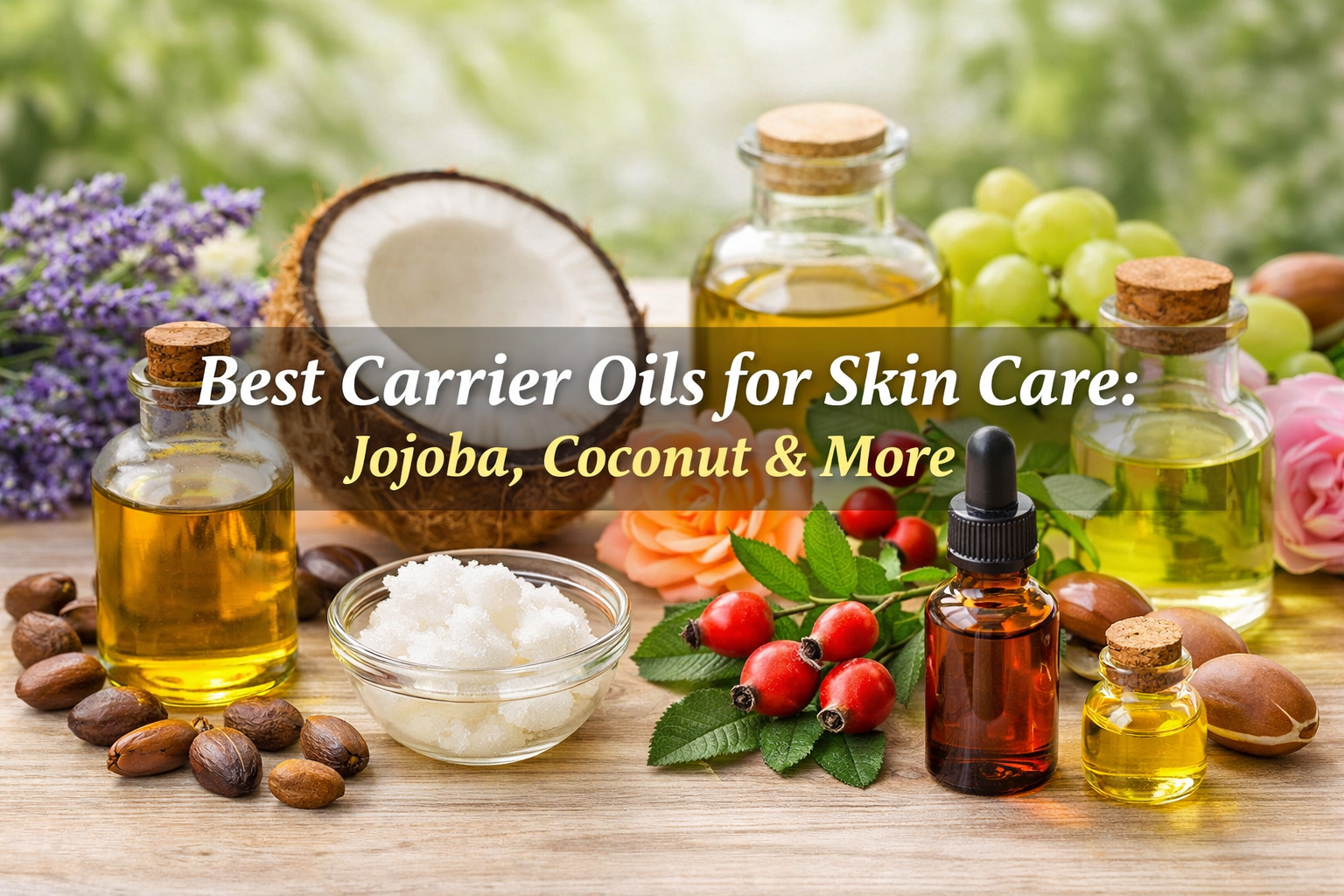
PBest carrier oils for skin care include plant-based oils like jojoba, coconut, rosehip, and grapeseed that nourish, protect,
balance the skin naturally.icture this: your skin craving moisture, softness, and that healthy, natural glow.
Enter carrier oils for skin care—pure, plant-based oils that nourish, protect, and restore balance.
They aren’t just “diluters” for essential oils. Each carrier oil brings its own blend of fatty acids, antioxidants, and skin-loving nutrients that work with your skin, not against it.
And here’s the lovely part—once you find the right carrier oil for your skin type, your skincare routine becomes simpler, gentler, and far more effective.
What Are Carrier Oils?
Carrier oils are natural plant oils extracted from seeds, nuts, or kernels that are used to dilute essential oils and nourish the skin.
They help deliver essential oils safely while also moisturizing, protecting the skin barrier, and supplying vitamins and fatty acids.
Why carrier oils matter for skin care
- They strengthen the skin’s moisture barrier
- They supply essential fatty acids and antioxidants
- They help essential oils absorb safely
- They work as standalone moisturizers and makeup removers
Truth is, choosing the best carrier oil for skin care can do more for your skin than many expensive creams.
Jojoba Oil — The Balancing Hero
When it comes to jojoba oil for skin, few oils are as universally loved.
Jojoba oil isn’t technically an oil—it’s a liquid wax ester that closely resembles your skin’s natural sebum. That’s why it doesn’t overload the skin or trigger excess oil production.
Benefits of jojoba oil for skin
- Lightweight, fast-absorbing, and non-comedogenic
- Helps regulate excess oil production
- Soothes irritation and supports acne-prone skin
- Rich in vitamin E and antioxidants
Best for: oily, combination, and acne-prone skin
How to use:
Apply 2–3 drops to slightly damp skin or blend with essential oils for a facial serum.
Coconut Oil — Deep Nourishment (With Care)
Coconut oil for skin care is rich, protective, and deeply moisturizing—but it isn’t suitable for everyone.
Coconut oil contains high levels of saturated fatty acids, especially lauric acid, which help reduce moisture loss and support the skin barrier.
Benefits of coconut oil for skin
- Excellent for very dry or flaky skin
- Helps repair the skin’s protective barrier
- Naturally antimicrobial
Important caution
Coconut oil is comedogenic for many people. If you have oily or acne-prone skin, it may clog pores.
Better option: fractionated coconut oil, which stays liquid and absorbs more easily.
Best for: dry, mature, or dehydrated skin
Other Best Carrier Oils for Skin Care
| Carrier Oil | Key Benefits | Best For |
|---|---|---|
| Grapeseed Oil | Lightweight, high in linoleic acid | Oily, acne-prone skin |
| Rosehip Oil | Vitamins A & C, improves texture | Mature or uneven skin tone |
| Sweet Almond Oil | Softening, vitamin E-rich | Dry or sensitive skin |
| Argan Oil | Antioxidant-rich, fast-absorbing | Normal to combination skin |
| Avocado Oil | Deep nourishment, improves elasticity | Dry or mature skin |
| Apricot Kernel Oil | Gentle, hypoallergenic | Sensitive or baby skin |
What Science Says About Carrier Oils for Skin
Carrier oils work because of their fatty acid composition.
- Linoleic-acid-rich oils (grapeseed, rosehip) help reduce clogged pores
- Oleic-acid-rich oils (avocado, almond) deeply nourish dry skin
- Occlusive oils (like coconut oil) reduce moisture loss by sealing hydration
Using the right oil often reduces excess oil production because hydrated skin doesn’t overcompensate.
How to Choose the Right Carrier Oil for Your Skin Type
For oily or acne-prone skin
Choose lightweight, non-comedogenic oils like:
- Jojoba oil
- Grapeseed oil
- Rosehip oil
For dry or mature skin
Go for richer oils such as:
- Avocado oil
- Coconut oil
- Argan oil
For combination skin
Use lighter oils on the T-zone and richer oils on dry areas.
For sensitive skin
Choose gentle oils like apricot kernel or sunflower oil. Always patch-test first.
How to Use Carrier Oils Safely
- Patch-test every new oil (wait 24 hours)
- Dilute essential oils properly (1–3 drops per teaspoon for facial use)
- Apply after water-based products to seal in moisture
- Store oils in dark glass bottles away from heat
- Replace oils every 6–12 months
DIY Carrier Oil Blend for Glowing Skin
Ingredients
- 10 mL jojoba oil
- 5 mL rosehip oil
- 2 mL argan oil
- 2 drops lavender essential oil (optional)
- 1 drop vitamin E oil
How to use
Massage 3–4 drops onto clean, damp skin at night.
Bottom Line
Carrier oils are nature’s skincare powerhouses.
Jojoba oil balances, coconut oil nourishes, and oils like rosehip or grapeseed fine-tune hydration and glow.
Choosing the best carrier oil for skin care based on your skin type simplifies your routine and keeps it beautifully natural.
Call to Action
Want to learn how to blend carrier oils with essential oils for your exact skin needs?
Visit SereneScents.in for detailed guides, recipes, and personalized aromatherapy tips.
FAQs
What are carrier oils used for?
Carrier oils dilute essential oils and nourish skin with hydration and nutrients.
Can I use carrier oils alone?
Yes. Many carrier oils work well as standalone moisturizers.
Which carrier oils are best for acne?
Jojoba, grapeseed, and rosehip oils help balance sebum and reduce breakouts.
Is coconut oil good for the face?
It suits dry skin but may clog pores on oily or acne-prone skin.
What is the lightest carrier oil?
Grapeseed and jojoba oils absorb quickly and feel non-greasy.
Can I mix multiple carrier oils?
Yes. Blending allows you to customize benefits and texture.
Do carrier oils have SPF?
Some oils have mild SPF but cannot replace sunscreen.
How long do carrier oils last?
Typically 6–12 months when stored correctly.
Which carrier oil is best for wrinkles?
Rosehip, argan, and avocado oils support elasticity and smoothness.
Can I use carrier oils daily?
Yes, when used in small amounts suited to your skin type.
Do carrier oils darken skin?
No. Some oils may help brighten uneven tone.



0 Comments